So you just got a fresh set — or you’re thinking about it — and the big question is how long are acrylic nails supposed to last. Because nobody wants to spend that kind of money and time just to have a nail pop off in the parking lot three days later. Been there. It’s not fun.
Here’s the thing most people don’t explain clearly: acrylic nails don’t have one lifespan. How long they last depends on whether you’re getting regular fills, what you do with your hands every day, how well they were applied in the first place, and honestly — how your body grows nails. Everyone’s different.
This post breaks down the real timeline, what’s normal, what’s not, and how to squeeze the most life out of every set.
The Short Answer#
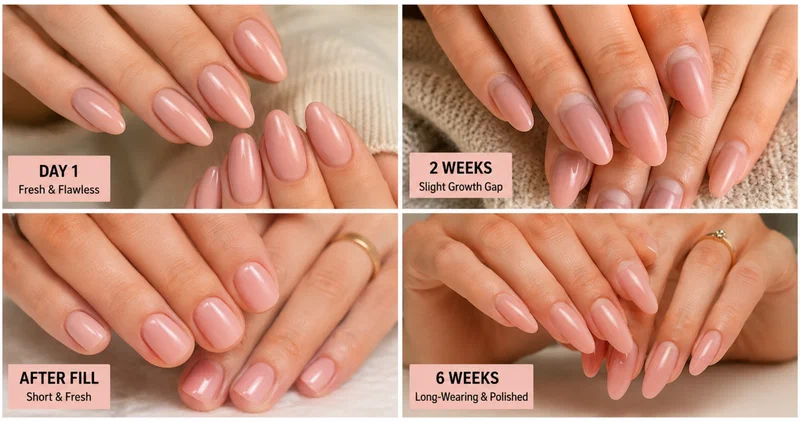
A full set of acrylic nails lasts about 2-3 weeks before you need a fill. With regular fills every 2-3 weeks, you can keep the same set going for 6-8 weeks (sometimes longer) before needing a completely new set.
Without any fills? Most people start seeing real problems around week 3-4. Lifting, breakage, that awkward growth gap that collects dirt. Not cute.
But that’s the general timeline. Your actual results depend on a bunch of factors — and understanding those is what keeps your nails looking fresh longer.

How Long Are Acrylic Nails Supposed to Last — The Real Breakdown#
With Regular Fills#
If you’re keeping up with fills every 2-3 weeks, your acrylic set can last 6-8 weeks total. Some people push it to 10-12 weeks with really good maintenance, but that depends on your nail growth speed and how careful you are.
Each fill appointment basically resets the clock. Your tech fills in the growth gap, rebalances the shape, and fixes any lifting. Think of it like getting your roots done — the original work is still there, it just needs refreshing.
If you want to explore more in this direction, my how to do acrylic nails at home post has plenty to dig into.
Without Fills#
Here’s where things get real. Acrylic nails without a fill start deteriorating around week 2-3. Your nails grow roughly 3mm per month — so by two weeks, there’s a visible gap between the acrylic and your cuticle. Not just a cosmetic issue, either.
That gap is where moisture gets trapped. Moisture means bacteria. Bacteria means green spots under your acrylic (yes, that’s a thing, and it’s exactly as unpleasant as it sounds).
By week 4 without a fill, most people experience:
- Visible growth gap that catches on things
- Lifting at the sides or cuticle area
- The nail feels heavier toward the tip — the balance shifts as it grows out
- Higher risk of the whole nail snapping off (taking natural nail with it — ouch)
At Home vs Professional#
Acrylics done at home (DIY kits) typically last a bit less — maybe 1-2 weeks — because the application technique makes a huge difference. Professional techs control the acrylic-to-liquid ratio precisely, apply at the right thickness, and prep the nail bed more thoroughly. That’s not a knock on DIY — it just takes practice to match salon-level longevity.
Why Your Acrylics Aren’t Lasting#
If your nails are lifting or popping off way earlier than they should, something’s going wrong. And it’s usually one of these:
Prep issues. This is the biggest one. If your nail plate isn’t properly dehydrated and primed before application, the acrylic has nothing solid to bond to. Oil on the nail bed = guaranteed early lifting. Your tech should be using a dehydrator and primer every single time.
Too thick or too thin. Acrylic applied too thick at the cuticle area lifts faster because there’s more surface tension. Too thin and it’s fragile. The sweet spot is thicker at the apex (stress point) and thinner toward the edges.
Your lifestyle. Not gonna lie — if your hands are in water constantly, you type aggressively, or you use your nails to open everything (we all do it), they won’t last as long. Acrylics are strong but they’re not indestructible.
Product quality. Here’s something nobody talks about enough — cheap MMA acrylic (methyl methacrylate) doesn’t bond as well and is actually harder to remove safely than EMA (ethyl methacrylate). If your fills are suspiciously cheap, ask what product your salon uses.
My how to remove acrylic nails at home post is a great companion read if you’re loving this style.
Your natural nail chemistry. Some people have naturally oilier nail beds. Some people’s nails grow faster. Some medications affect nail growth and bonding. If you’ve tried everything and your acrylics still lift quickly, your body chemistry might just make it harder — and that’s okay. A good tech can adjust their approach.
Acrylic Nails on Short Nails — Do They Last Longer?#
Short answer: yes, usually.
Longer nails create more leverage. Think about it — every time you bump something or grip something, the longer the nail, the more force gets applied to that bonded area near your cuticle. It’s basic physics. Shorter acrylic nails have less surface area catching on things and less torque trying to peel them off.

If your acrylics keep breaking or lifting, going a bit shorter for your next set might solve the problem without changing anything else. It’s the easiest fix most people overlook.
How to Make Acrylic Nails Last Longer#
These aren’t fancy tricks — they’re just habits that actually matter:
- Wear gloves for dishes and cleaning — hot water and chemicals weaken the bond faster than anything else
- Don’t use your nails as tools — prying lids, peeling stickers, scratching things off. Use a key, a spoon, literally anything else
- Apply cuticle oil daily — sounds counterintuitive but keeping the skin around your nails hydrated prevents it from shrinking away and creating lift points
- Avoid soaking your hands — long baths, swimming without protection, washing hair aggressively (try using a scalp brush instead of your nail tips)
- Book your fill before you think you need one — the two-week mark is your sweet spot. Don’t wait until things are already lifting
- Don’t pick at lifted areas — if a corner lifts, use a drop of nail glue to seal it until your fill appointment. Picking makes it worse every time
Want a set to actually reach that six-week mark? A few cheap basics do most of the heavy lifting:
- Rubber gloves — the #1 way to protect the bond from water and chemicals
- Cuticle oil — keeps the skin from shrinking back and creating lift points
- Nail glue — seal a lifted corner instantly to buy time until your fill
- Glossy top coat — a fresh swipe restores shine and reseals the surface
For more ideas like this, check out my how to make your nails grow faster post — worth a scroll.

Signs Your Acrylics Need a Fill#
Sometimes it’s obvious (hello, visible gap). But here are the signs people miss:
- The nail feels slightly loose when you press on it — even if it looks fine
- You can see a shadow or discoloration under the acrylic near the cuticle
- The shape looks different — more top-heavy because the apex has grown forward
- Corners are starting to catch on clothing or hair
- The acrylic sounds different when you tap it against something (weird but true — it changes from a solid click to a slightly hollow sound when there’s separation)
If you notice any of these, don’t wait another week. Book the fill.
Full Set vs Refill — When to Start Fresh#
A refill (or infill) maintains your existing set. A full set means removing everything and starting from scratch. Here’s when you need each:
Get a fill when: it’s been 2-3 weeks, no significant damage, just a growth gap to fill in. This should be your routine appointment.
Get a new full set when: it’s been 6-8+ weeks, there’s significant lifting you can’t ignore, multiple nails have broken, or you want a completely different shape or length. Also if you notice any discoloration or suspect moisture is trapped underneath — don’t mess around with that.
My summer acrylic nails post goes deeper on this whole vibe if you want to keep going.
Quick FAQ#
Are fills or full sets better for nail health?#
Fills are gentler because you’re not removing the entire product from your natural nail each time. Less filing, less trauma. Regular fills every 2-3 weeks with a full new set every 6-8 weeks is the schedule most techs recommend for keeping your natural nails healthy underneath.
Do acrylic nails ruin your natural nails?#
Not if they’re applied and removed properly. The damage happens from improper removal (peeling, ripping), over-filing during prep, or leaving acrylics on way too long without maintenance. EMA-based acrylic with proper prep and professional soak-off removal shouldn’t cause lasting damage.
How are acrylic nails different from gel nails in terms of lifespan?#
Gel polish lasts about 2-3 weeks total. Hard gel extensions last similar to acrylics (2-3 weeks between fills). Acrylics are generally considered more durable for everyday wear and easier to repair at home if something chips or cracks. Gel tends to peel off in sheets when it fails; acrylic tends to lift gradually.
Final Thoughts#
So — how long are acrylic nails supposed to last? About 2-3 weeks between fills, 6-8 weeks total before a new set. But honestly, your mileage depends entirely on prep quality, your lifestyle, and whether you bother with basic aftercare.
The good news is that most problems — early lifting, breakage, nails popping off randomly — are fixable once you know what’s causing them. Sometimes it’s as simple as keeping your hands out of dishwater or going slightly shorter on length.
Save this one for next time you’re sitting in the salon wondering if something’s wrong or if you just need to adjust expectations. And if your nails are lasting two full weeks without a single issue? You’ve found a good tech. Keep them.