So here’s the thing — acrylic nails are gorgeous until they’re not. Maybe your set has grown out way too far, or one nail popped off and the rest are starting to lift. Maybe you’re just ready for a fresh start before summer hits. Whatever the reason, you don’t need a salon appointment to take them off.
Learning how to remove acrylic nails at home is honestly easier than most people think. You just need the right method and a little patience. And I really do mean patience — rush it, and you’ll peel off layers of your actual nail. Take your time, and they come off clean. No drama.
This guide walks through four different methods. Some use acetone, some don’t. Pick whichever one fits what you’ve got at home and how much time you’re willing to spend.
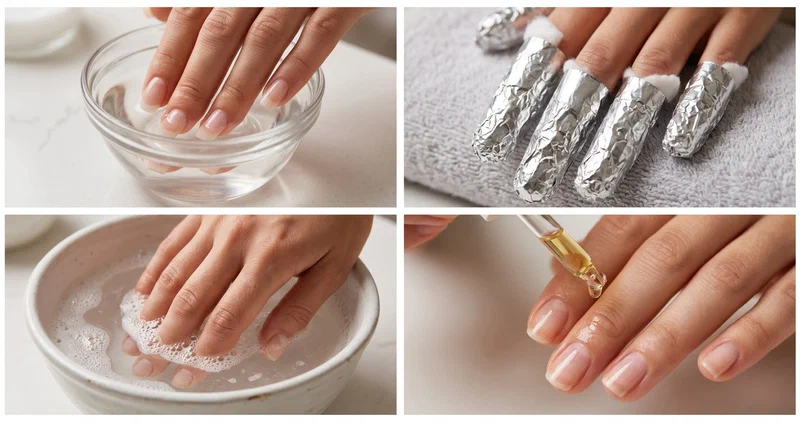
What You’ll Need Before You Start#
Your supply list depends on which method you pick, but here’s the general lineup:
- 100% pure acetone — not regular remover — that won't touch acrylic
- Coarse nail file (~100 grit) — to file down the shiny topcoat first
- Aluminum foil + cotton balls — to wrap the acetone against each nail
- Nail buffer — to smooth the nail once they're off
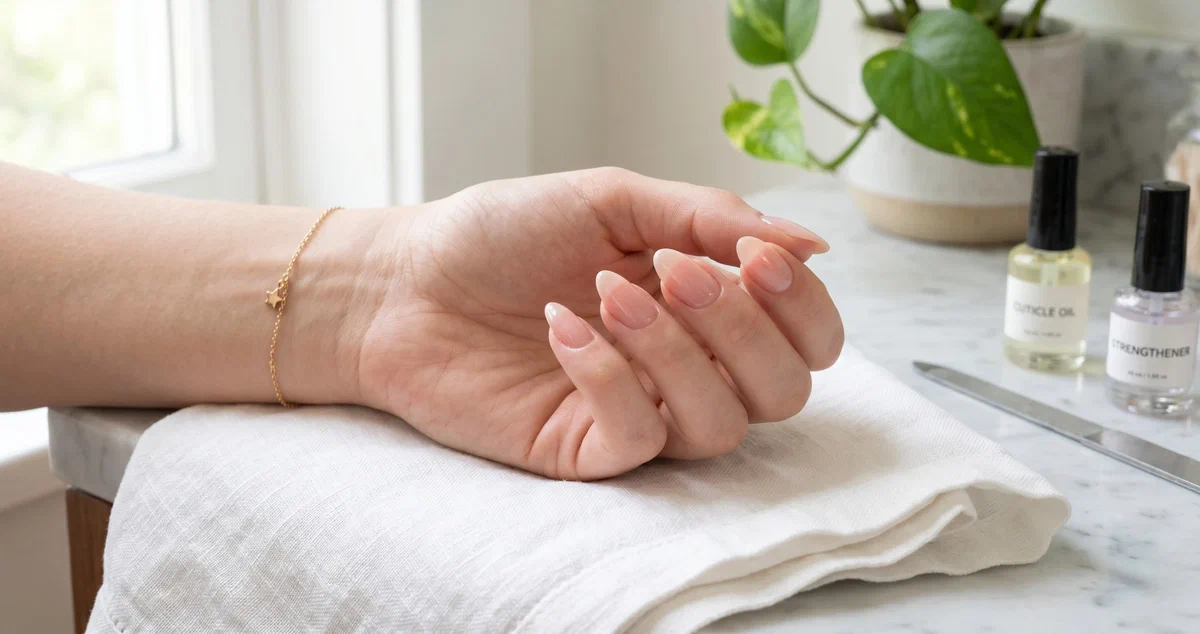
- Cuticle oil — to rehydrate afterward
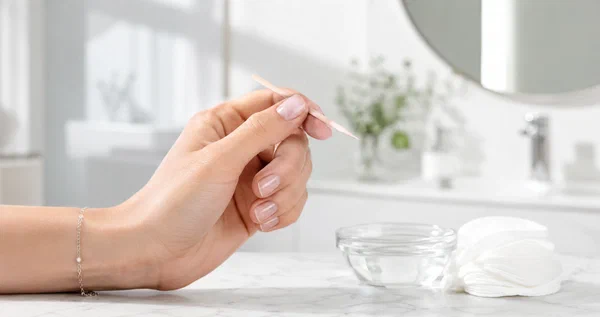
- Cuticle pusher or orangewood stick — to gently lift softened acrylic
- A small glass bowl + paper towels — most of this is already in your drawer
Most of this is probably already in your bathroom drawer. The only thing worth grabbing if you don’t have it is the pure acetone — the drugstore kind is totally fine.
If you want to explore more in this direction, my how to do acrylic nails at home post has plenty to dig into.
How to Remove Acrylic Nails at Home: 4 Safe Methods#
Not every method works for every situation. Thick fresh acrylics? You’ll want acetone. Already lifting and thin? You can probably skip it. Here’s what actually works — and what to expect from each one.
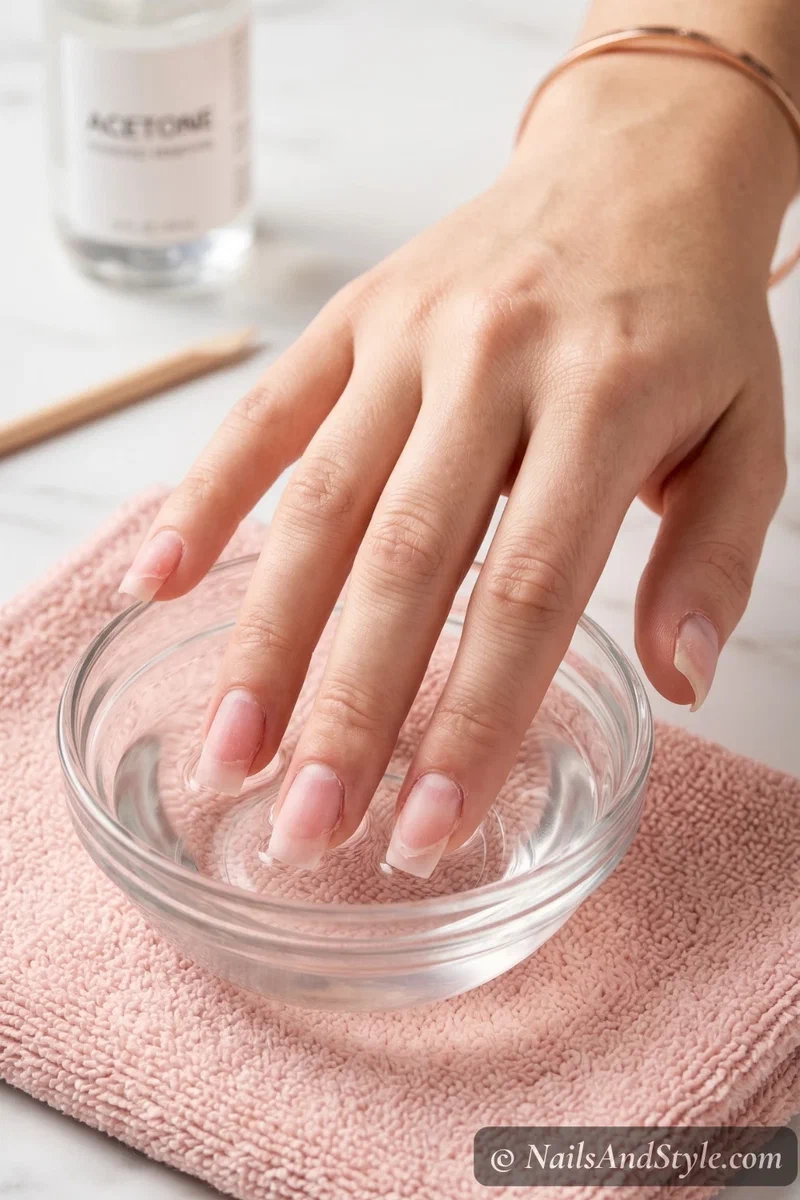
Acetone Soak Bowl Method#
The gold standard. Start by filing down the shiny top coat — you need to break that seal so the acetone can actually get to the acrylic underneath. Then pour enough pure acetone into a small glass bowl to cover your nails. Soak for 20-30 minutes.
The acrylic will get soft and gummy. Gently push it off with a cuticle stick. If it’s still hard, soak for another 5-10 minutes instead of forcing it.
Pro tip — warm up the acetone by placing the bowl inside a larger bowl of hot water. Speeds things up a lot. But don’t microwave it. Acetone is super flammable. Seriously.
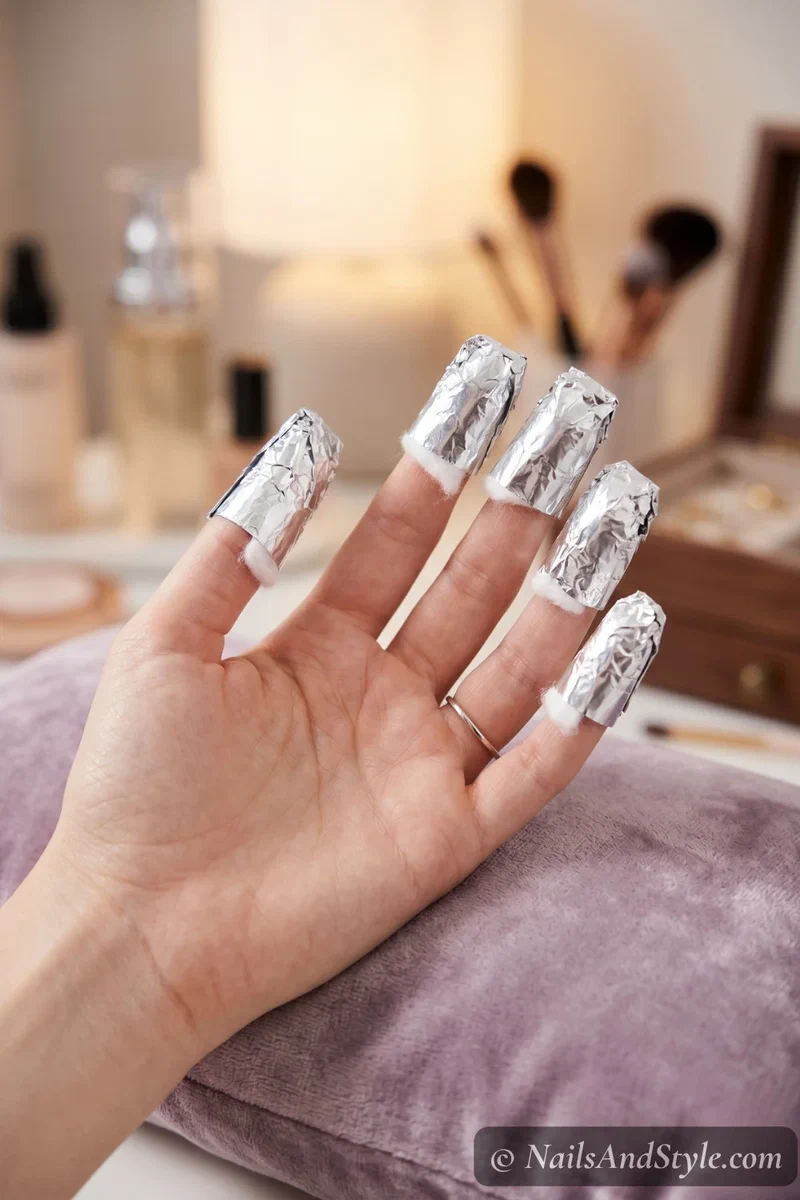
Foil Wrap Acrylic Removal#
Don’t love soaking your fingers in a bowl for half an hour? Same. This method keeps the acetone targeted. File down the top coat, soak small pieces of cotton in acetone, press one onto each nail, and wrap every finger in a little foil cocoon.
Leave them on for 20-25 minutes. When you unwrap, the acrylic should be soft enough to scrape off gently with a cuticle pusher. This uses way less acetone and honestly feels less messy.
My how to make your nails stronger at home naturally post is a great companion read if you’re loving this style.
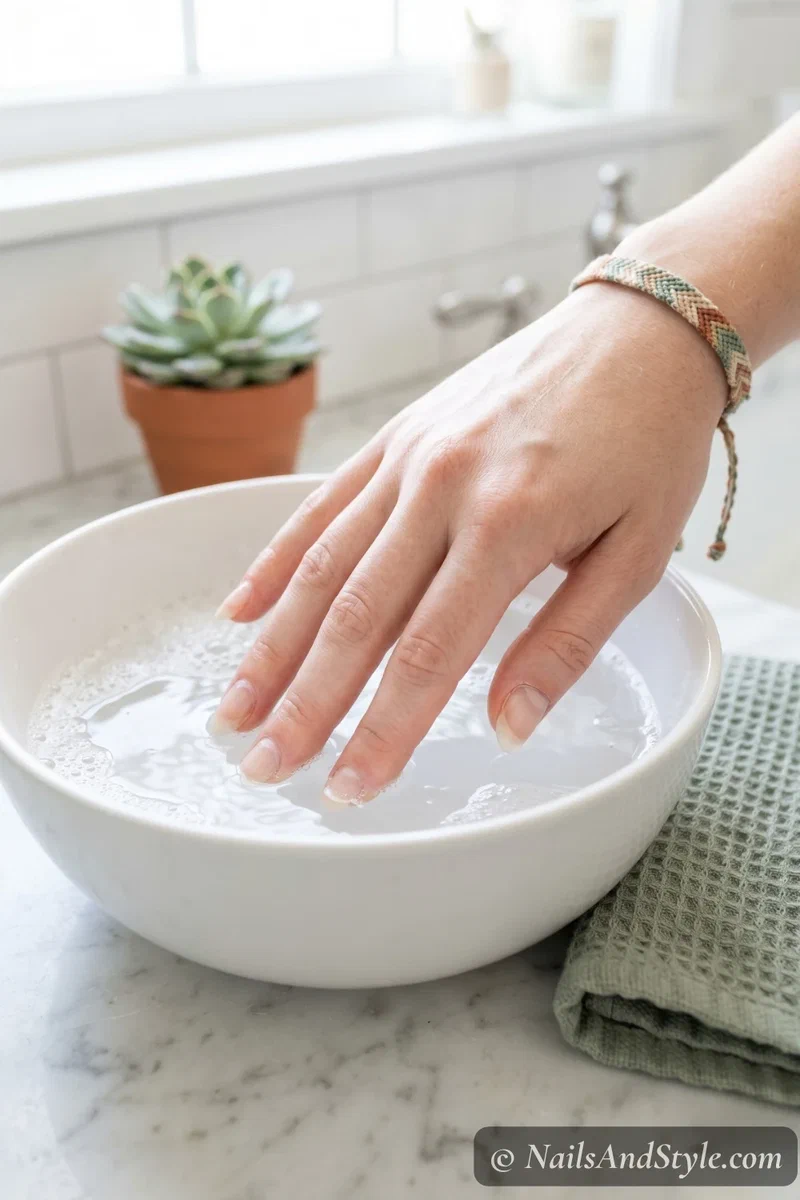
Hot Water Acrylic Nail Removal#
No acetone at home? This works — but it takes more patience. File the acrylic down as thin as you can first. Then soak your nails in warm (not boiling) water mixed with a little dish soap for 30-40 minutes. The warm water softens the glue underneath, and you can slowly work the edges up with a cuticle pusher.
Real talk — this method works best when your acrylics are already starting to lift on their own. If they’re fresh and thick, you’ll be sitting there a while. But if you’ve got sensitive skin or just want to skip chemicals entirely, it’s a solid option.
Filing Method#
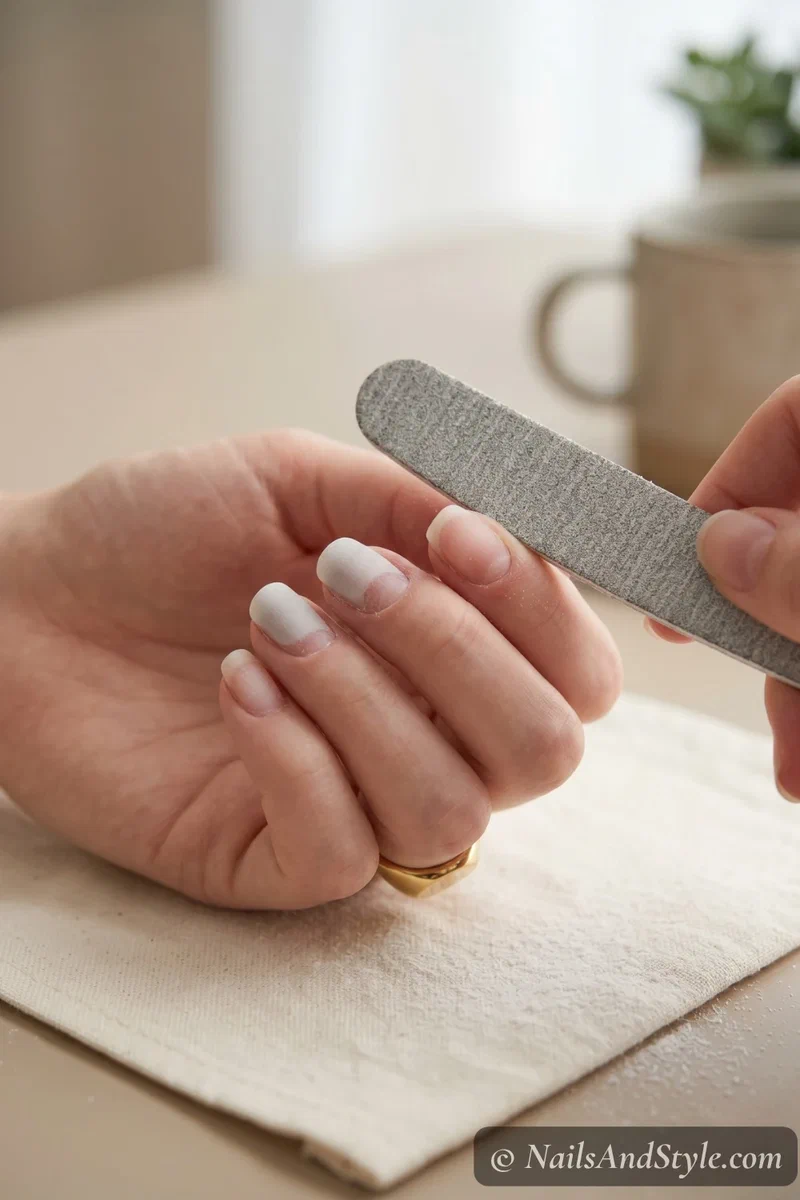
This is the most time-consuming option but it’s the gentlest on your skin. You’re literally filing the acrylic off layer by layer. Start with a 100-grit coarse file to take down the bulk, then switch to something finer (180-grit) as you get closer to your natural nail.
Go slow. It’s really easy to file into your actual nail if you’re not paying attention. Stop frequently, check your progress, and once you can see your natural nail peeking through — switch to a buffer and treat it gently.
What about the dental floss method? You’ve probably seen this one on social media — someone slides dental floss under the acrylic and saws back and forth. Does it work? Sometimes. Should you try it? I’d skip it. It can rip off layers of your natural nail and it’s pretty uncomfortable. If your acrylics are loose enough for floss, they’re loose enough to soak off gently.
For more ideas like this, check out my how to get press on nails to stay on post — worth a scroll.
Nail Care After Removing Acrylics#
Your nails are going to look a little rough after removal. That’s normal. They might be thin, dry, maybe a little bendy. Don’t panic — they grow back stronger.
Here’s what to do right away:
- Buff gently to smooth out rough patches
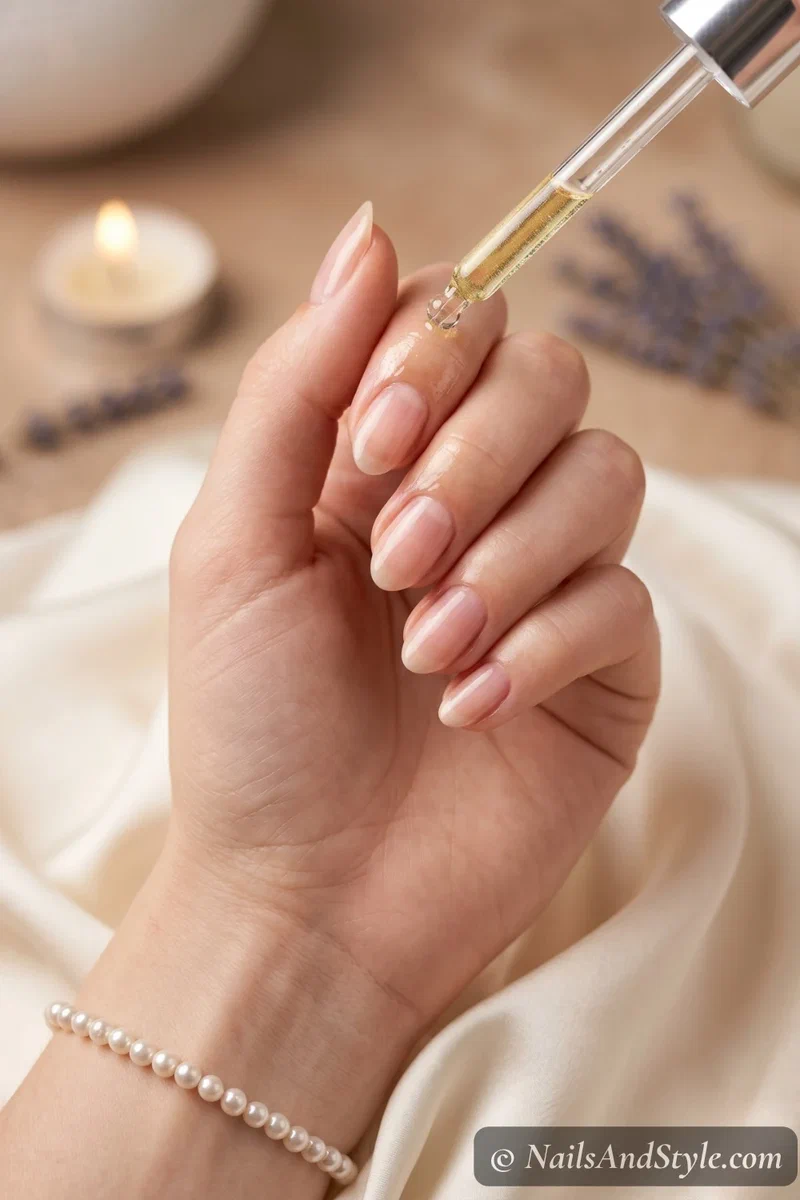
- Apply a thick layer of cuticle oil and really massage it in
- Use a nail strengthener as your base coat for the next few weeks
- Keep your nails short while they recover — long weak nails just snap and make things worse
- Moisturize your hands constantly (especially after acetone — it dries everything out)
Give your nails at least 2-3 weeks to breathe before putting new acrylics or gel back on. I know it’s tempting to go right back, but they genuinely need that break.
That break is also the perfect window to focus on regrowth — my how to grow nails faster at home naturally post covers exactly what to do while your natural nails bounce back.
Tips to Protect Your Natural Nails#
- Never peel or pry off acrylics — this literally rips the top layer off your nail bed
- Always file down the top coat before soaking
- If the acrylic isn’t budging, soak longer — don’t force it
- Wear gloves when cleaning for the first week after removal
- Skip gel and acrylics for at least two weeks while nails recover
- Apply cuticle oil morning and night — your nails are thirsty
My how to make your nails stronger at home naturally post goes deeper on this whole vibe if you want to keep going.
Quick FAQ#
Can I remove thick acrylic nails at home without damage?#
Yes — but file down as much of the bulk as possible first. Thick acrylics need more soaking time, usually 30-40 minutes in acetone instead of 20. The foil wrap method works especially well for thick sets because it keeps the acetone concentrated right on the nail.
Is it better to use acetone or go without?#
Acetone is faster and more effective — it’s what salons use too. But if you have sensitive skin or eczema, the hot water or filing method is gentler. Either approach works, acetone is just quicker about it.
Will my nails be damaged after removing acrylics?#
Some temporary thinning is totally normal, especially if you’ve worn acrylics for months. With proper aftercare — cuticle oil, strengthener, keeping them short — most nails bounce back within 3-4 weeks. The real damage comes from ripping acrylics off, not from doing it properly.
Final Thoughts#
Once you know how to remove acrylic nails at home, you’ll never stress about it again. The acetone soak is the fastest route, but every method here works — just pick the one that matches your patience level and what you’ve got on hand.
Be gentle, don’t rush, and absolutely don’t skip the aftercare. Your natural nails are tougher than you think. They just need a little TLC after being covered up for a while. Bookmark this for next time, slather on some cuticle oil, and let those nails breathe.