That moment when you’re done with your press-ons and you just want them gone. One’s already lifting, another caught on your sweater, and you’re this close to just ripping them all off. Don’t. Seriously, don’t.
If you glued your press-ons on (not adhesive tabs — actual nail glue), how to take off press-on nails with glue safely is something you need to know before you wreck your natural nails for the next two months. Nail glue creates a bond that’s meant to hold, which is great while you’re wearing them — but it also means removal needs a specific approach.
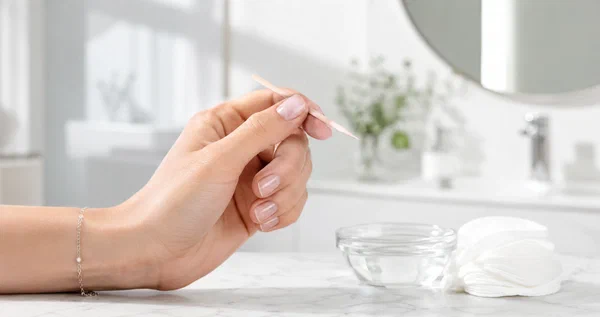
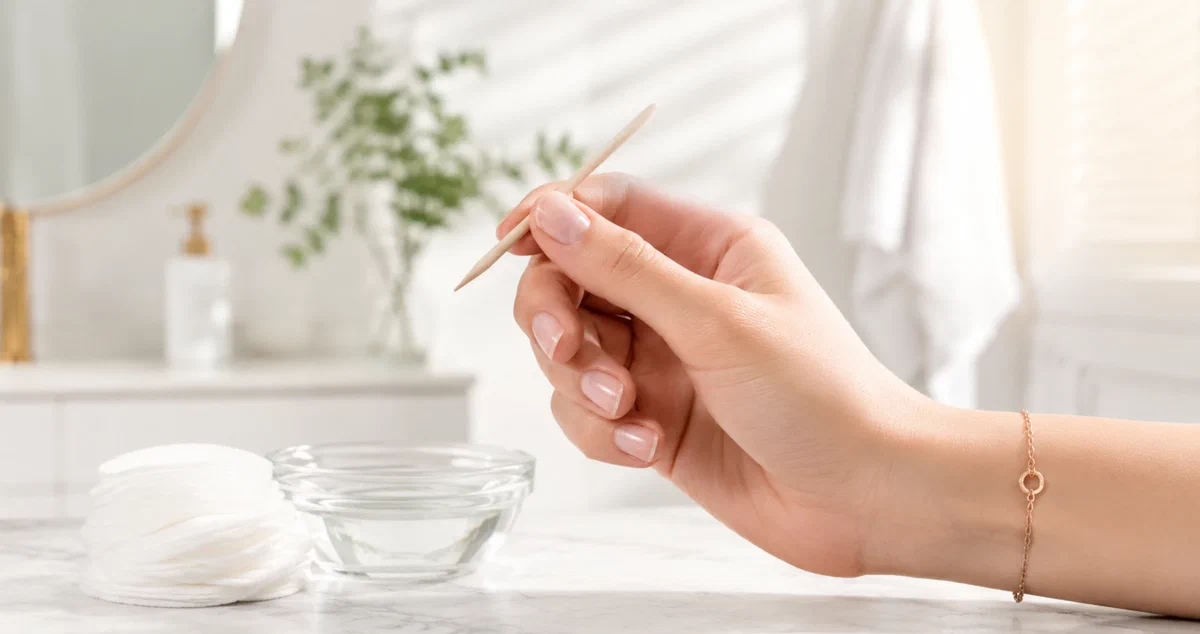
Good news: it’s not hard. You just need something to dissolve the glue, a little patience, and an orange wood stick. That’s pretty much it.
Applying a specific brand like KISS? The same soak-and-slide approach works — my how to remove KISS press-on nails guide covers it for that set too.
Why Glue Makes Removal Different#
Adhesive tabs are easy — they peel off with warm water in a few minutes, barely any effort. Nail glue is a whole different situation. It’s designed to bond hard and last, which means it won’t just release with a little warmth.
Nail glue (cyanoacrylate, if you want to get technical) needs to be chemically dissolved or softened enough that the bond breaks down without your natural nail getting caught in the middle. That’s what all the methods below do — they attack the glue, not your nail.
The rule is simple: if you have to pull, it’s not ready. More soaking, less force. Every single time.
If you want to explore more in this direction, my how to get press on nails to stay on post has plenty to dig into.
What You’ll Need#
- Pure acetone — the fastest way to dissolve nail glue
- Cotton pads — soak and press against each nail
- Aluminum foil — wrap to hold the acetone hands-free
- Cuticle oil — for oil-flooding and aftercare
- Strengthening base coat — to protect nails post-removal
- A bowl of warm, soapy water — the gentle no-acetone option
How to Take Off Press-On Nails with Glue — Four Methods#
Method 1: The Acetone Soak#
Fastest. Most effective. Slightly drying but nothing some oil can’t fix after.
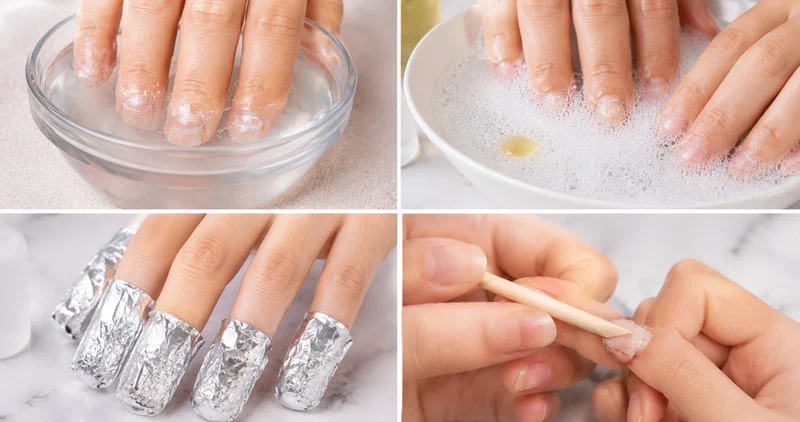
Fill a shallow bowl with enough pure acetone to cover your nails (not your whole hand — just up to the first knuckle). Soak for 10-15 minutes. You’ll feel the nails start to shift and loosen. Once a nail moves when you gently wiggle it, slide an orange wood stick under the lifted edge and ease it off.
Go from the side, not from the cuticle. Working from the side puts less pressure on the thinnest part of your natural nail.
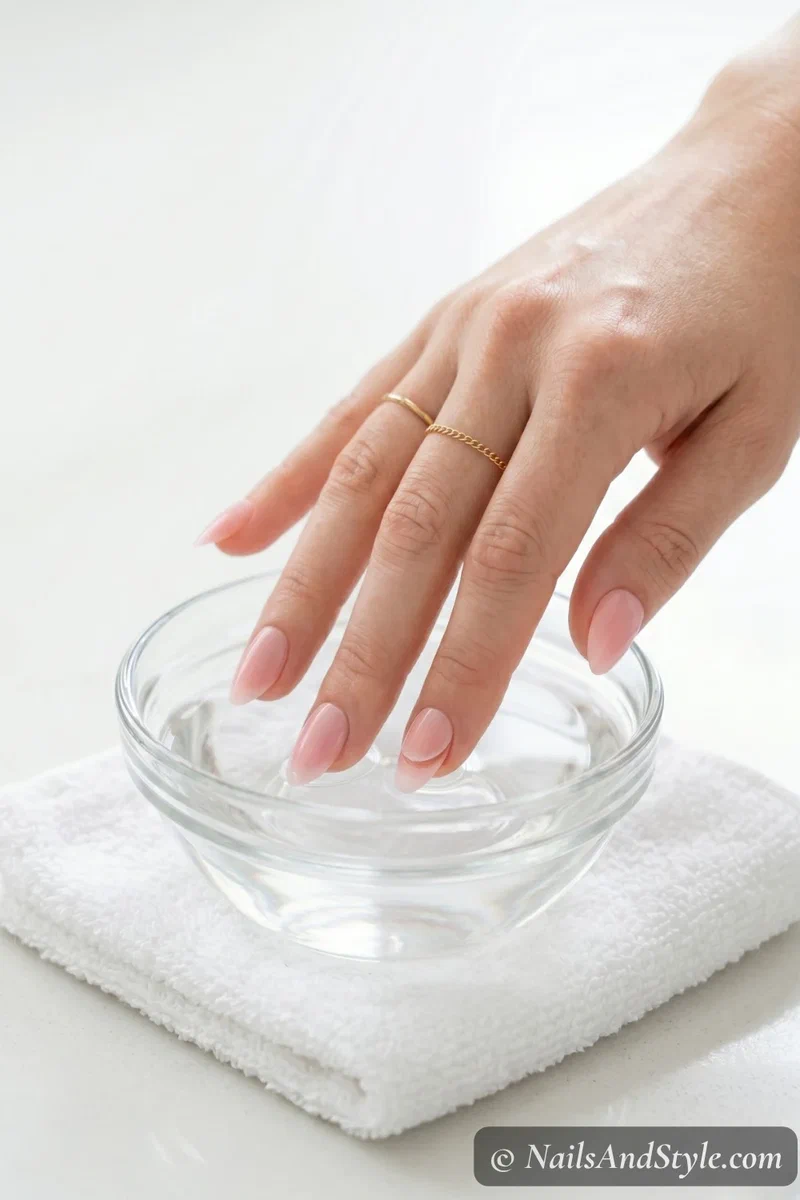
Quick tip: If your skin gets irritated by acetone (it can sting if you have cuts or dry patches), coat the skin around your nails with petroleum jelly before soaking. Creates a barrier without affecting the nail surface.
Method 2: Warm Soapy Water#
No chemicals, no strong smells, gentler on your skin. Takes longer but it works — especially if you added some oil into the mix.
Fill a bowl with warm water (comfortable bath temperature), squeeze in some dish soap, and add a tablespoon of olive oil or coconut oil. The soap breaks down adhesive, the oil works its way under the glue line, and the warmth softens everything.
Soak for 15-20 minutes. Check each nail every five minutes by pressing gently — when it rocks or shifts, it’s time. Use your orange wood stick from the side edge and work slowly across the nail bed.
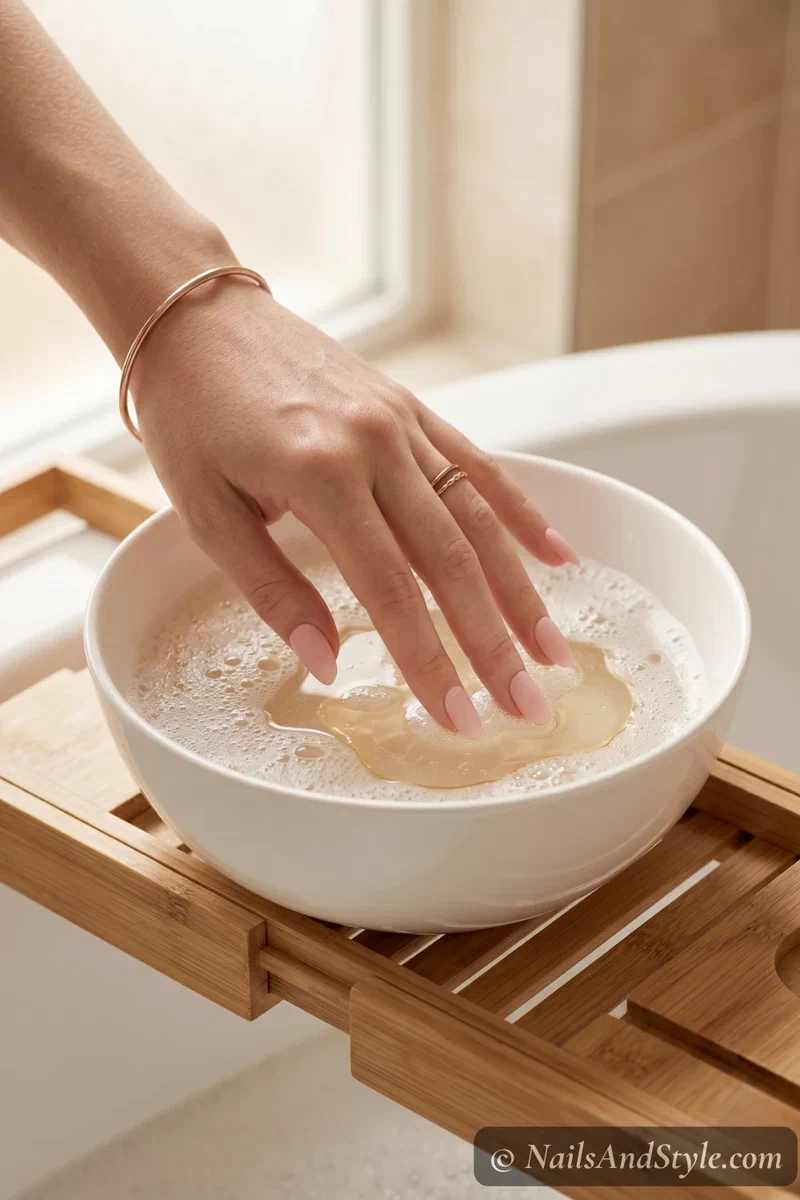
This method won’t work as fast on really strong nail glue — the kind that bonds in seconds and holds through showers. If you used that type, you might need to switch to acetone or combine this soak with the foil wrap below.
My how to make your nails stronger at home naturally post is a great companion read if you’re loving this style.
Method 3: The Foil Wrap (Hands-Free)#
This one’s great if you don’t want to sit with your hands in a bowl for fifteen minutes. You can actually walk around, watch something, make a snack — whatever.
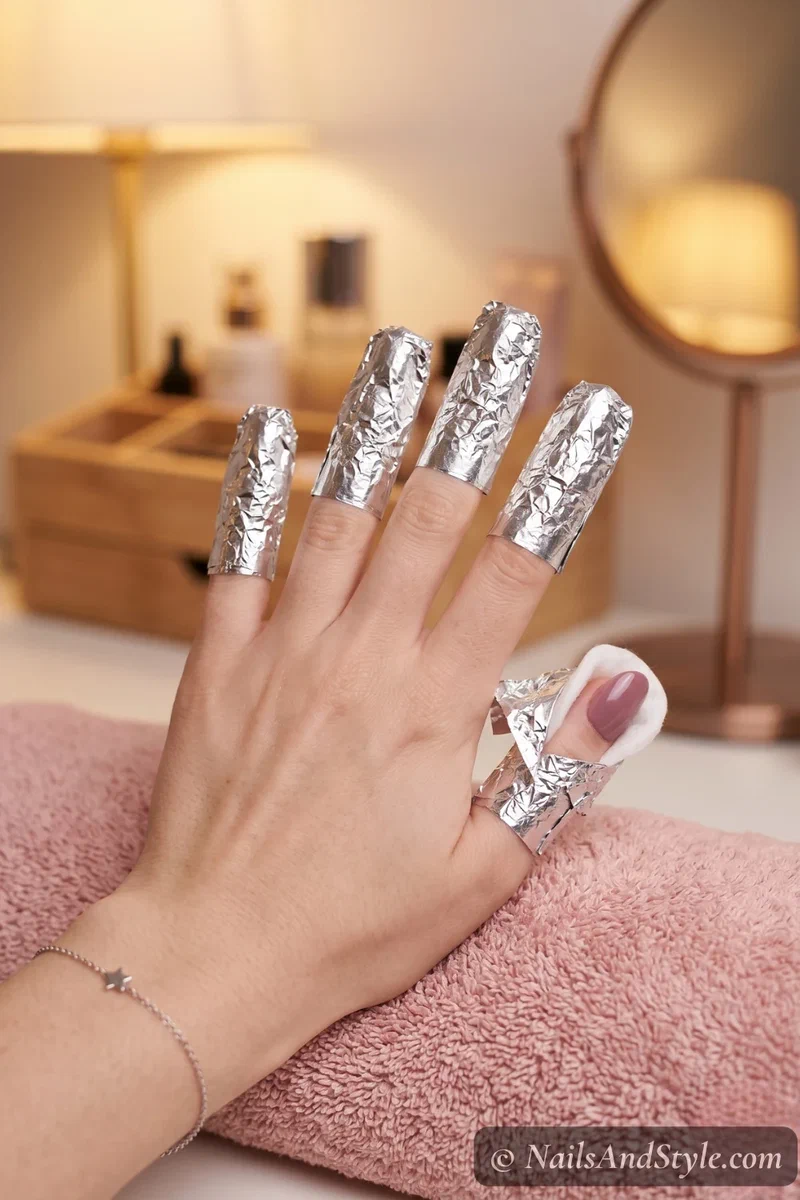
Soak small cotton pads in acetone (or even nail polish remover with acetone). Press one against each nail. Wrap each finger tightly in a small square of aluminum foil to hold the cotton in place. Wait 12-15 minutes.
The foil traps heat from your hand, which speeds up the acetone’s work. When you unwrap, the press-ons should practically slide off with barely any pressure. If one’s still holding, rewrap it for another five minutes.
Method 4: Oil Flooding#
Hear me out on this one — it’s the gentlest option and works well for nails that are already partially lifting.
Take cuticle oil, olive oil, or coconut oil and drip it along the edges of each press-on where you can see any gap between the press-on and your natural nail. Let it sit for a few minutes, then add more. The oil slowly works its way under the press-on, weakening the glue’s grip.
This won’t work on a perfectly adhered press-on with zero gaps. But if your nails are a week or two old and some edges are starting to lift? Oil flooding is the gentlest way to finish the job without any soaking at all.
Removing Leftover Glue Residue#
Press-ons are off — great. But now you’ve got patchy dried glue all over your natural nails. Here’s how to deal with it without over-buffing.
For thick glue patches: Soak a cotton pad in acetone and hold it against the spot for 30-60 seconds. The glue will soften. Gently scrape it off with an orange wood stick or your nail (not a metal tool — too harsh on softened nail plate).
For thin residue: A few passes with a fine-grit nail buffer takes care of this. Don’t press hard. You’re just smoothing, not grinding. Three or four light strokes per nail is plenty.
For sticky residue: Rub a drop of cuticle oil over it and roll the residue off with your fingertip. This works surprisingly well for that annoying thin sticky film that’s left behind.
For more ideas like this, check out my how to make press on nails look natural post — worth a scroll.
Aftercare — Taking Care of Your Nails Post-Removal#
Your natural nails just spent days (or weeks) sealed under acrylic with glue on top. They’re probably a bit dehydrated. Give them some attention.
Immediately after removal:
- Wash hands gently with mild soap
- Apply cuticle oil generously to every nail — massage it in for a minute
- Follow with a thick hand cream
For the next 2-3 days:
- Apply cuticle oil at least twice daily (morning and night)
- Keep nails short — they’ll be slightly weaker right after removal so don’t tempt fate with length
- Skip another press-on set for a day or two if possible. Let them breathe.
- Consider a strengthening base coat if your nails feel thin or flexible
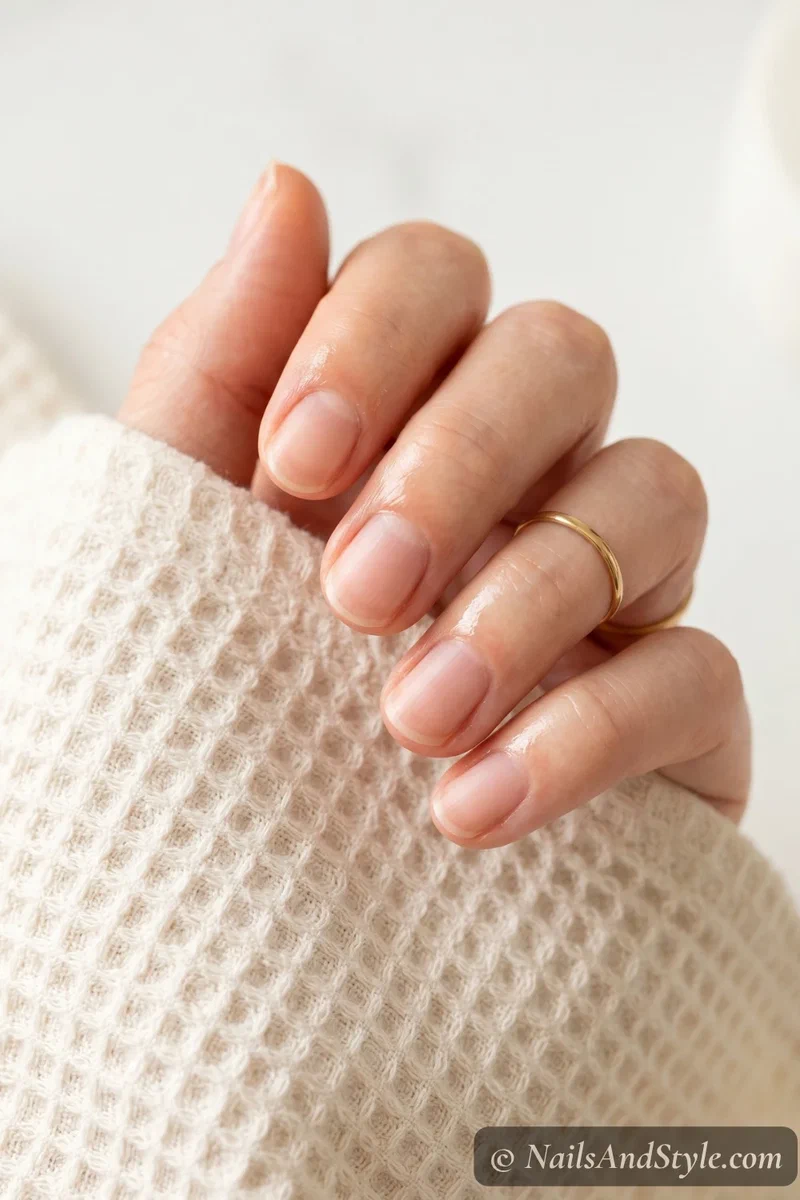
If your nails look white or chalky after removal, don’t panic. That’s just surface dehydration from the acetone or from being sealed off from air. It fades within a day as your nails rehydrate.
Can You Reuse Your Press-Ons?#
Depends on how you took them off.
If you soaked them gently and they came off in one piece without cracking — yes, absolutely. File off any old glue from the underside, store them flat in their original box (or a small container), and they’re ready for next time.
If they bent, cracked, or split during removal — they’re done. A warped press-on won’t sit flush against your nail, which means it’ll lift almost immediately when you try to wear it again.
The soapy water and oil flooding methods are best for preserving press-ons for reuse since they involve no harsh chemicals that might cloud or damage the finish.
My how to remove acrylic nails at home post goes deeper on this whole vibe if you want to keep going.
Quick FAQ#
What if I can’t find pure acetone?#
Regular nail polish remover with acetone works too — it’s just slower because it’s diluted. You’ll need to soak longer (20-25 minutes instead of 10-15). Acetone-free remover won’t work for nail glue at all though. You’d need to use the water or oil methods instead.
Is it okay to peel off a press-on that’s already half lifted?#
If it’s genuinely only hanging on by a tiny corner, you can usually ease it off with an orange wood stick without soaking. But if there’s still solid contact across any part of the nail bed, soak it. Even partial contact means pulling = damage.
How soon can I apply a new set after removal?#
You can technically reapply the same day if your nails feel fine. But giving them 24-48 hours with just cuticle oil lets them recover. If your nails feel thin, peely, or look white — wait a few days and focus on hydration before putting anything new on top.
Final Thoughts#
Knowing how to take off press-on nails with glue comes down to one principle: dissolve the glue, don’t fight it. Whether you choose acetone (fastest), warm soapy water (gentlest), foil wraps (most convenient), or oil flooding (for already-lifting nails) — the result is the same. Clean removal, healthy nails underneath, ready for your next set whenever you want.
The temptation to just yank them off is real. I get it. But ten minutes of soaking saves you from weeks of thin, peeling nails that can’t hold polish or grow without breaking. Not a trade-off worth making.
Keep an orange wood stick and some acetone in your bathroom drawer. Future you will be grateful.